
DIY Didn’t Die. It Mutated.
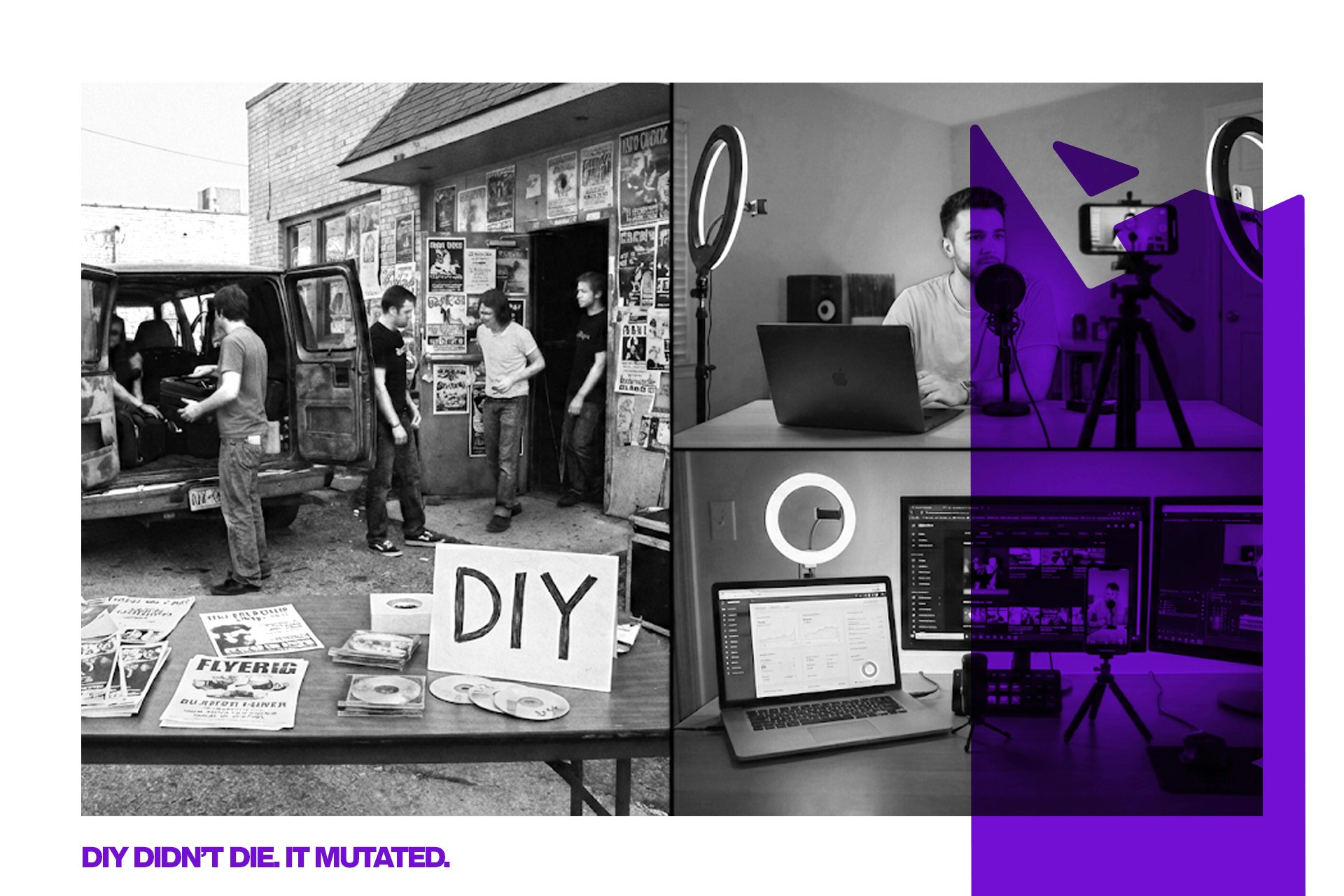
DIY Didn’t Die. It Mutated.
When people talk about being a DIY artist today, it often sounds like a superpower.
You can release music globally from your bedroom.
You can reach fans directly.
You can build an audience without permission.
You can do everything yourself.
That part is true.
But it leaves out something important.
DIY used to mean freedom.
For many artists now, it feels more like pressure.
What DIY meant in the 2000s
When I was starting out in the late 90s and early 2000s, DIY was not a buzzword. It was simply the only option available.
If you wanted anything to happen, you had to make it happen yourself.
That meant:
booking shows
hiring vans
designing flyers
burning CDs
putting on parties
rehearsing relentlessly
building scenes from the ground up
DIY was slow, physical, local, and social.
It also had limits. Distribution was hard. Reach was small. Everything took time and effort.
But there was something healthy about it.
You were not expected to be everywhere.
You were not compared to everyone.
And you were not told that success should happen quickly.
What DIY means now
Today’s version of DIY looks very different.
Artists are expected to:
write and release constantly
film and edit content
manage multiple platforms
analyse performance
understand algorithms
build an audience
monetise early
stay visible at all times
The tools are extraordinary.
The expectations are relentless.
DIY has quietly shifted from empowerment to obligation.
And when everything is possible, it becomes very hard to know what actually matters.
The illusion of control
Modern DIY culture often promises control.
You control your release schedule.
You control your marketing.
You control your audience.
In reality, much of what artists are told to focus on sits outside their control.
Algorithms change.
Platforms rise and fall.
Attention moves on.
This creates a strange tension.
Artists are given responsibility without stability.
Freedom without guidance.
Power without context.
It is no surprise that so many feel overwhelmed.
Doing everything is not the same as doing the right things
One of the biggest misconceptions in modern music culture is that independence means doing everything yourself.
It does not.
Doing everything yourself usually leads to:
creative exhaustion
shallow focus
rushed decisions
diluted identity
burnout
DIY was never about doing more.
It was about doing what mattered.
That distinction has been lost.
From DIY to doing it together
The healthiest independent artists I see today are not lone wolves.
They build small ecosystems around themselves.
A few trusted collaborators.
A handful of core tools.
A clear sense of what they are trying to build.
This is still DIY, but it is quieter and more intentional.
It is less about proving independence and more about protecting creativity.
The real opportunity of modern DIY
Despite the pressure, something genuinely powerful remains.
Artists now have the ability to:
speak directly to fans
build long-term relationships
test ideas quickly
create income without intermediaries
design careers that fit their lives
But this only works when DIY is paired with clarity.
Clarity about:
what success means
what enough looks like
what is worth your energy
what you can safely ignore
Without that, the freedom becomes noise.
A more sustainable way to think about DIY
DIY is not about doing everything.
It is about choosing deliberately.
It is about:
understanding the tools
respecting your limits
building slowly
thinking long term
letting creativity lead
Used well, DIY is still a gift.
Used poorly, it becomes a trap.
A final thought
DIY did not disappear. It evolved.
The challenge now is not access.
It is focus.
Artists do not need more tools.
They need better filters.
And the confidence to build something that makes sense for them, not something that looks good from the outside.
————————————————
These ideas tend to continue in my Field Notes newsletter, where I write from inside ongoing work and reflect on the patterns and decisions that shape sustainable artist growth.
If you like what you find here and want to stay connected, sign up to the Field Recordings newsletter below to be the first to hear about new tools, fresh thinking, and occasional useful things worth sharing.