
The Myth of the “Pure Artist” (and the Damage It’s Done)
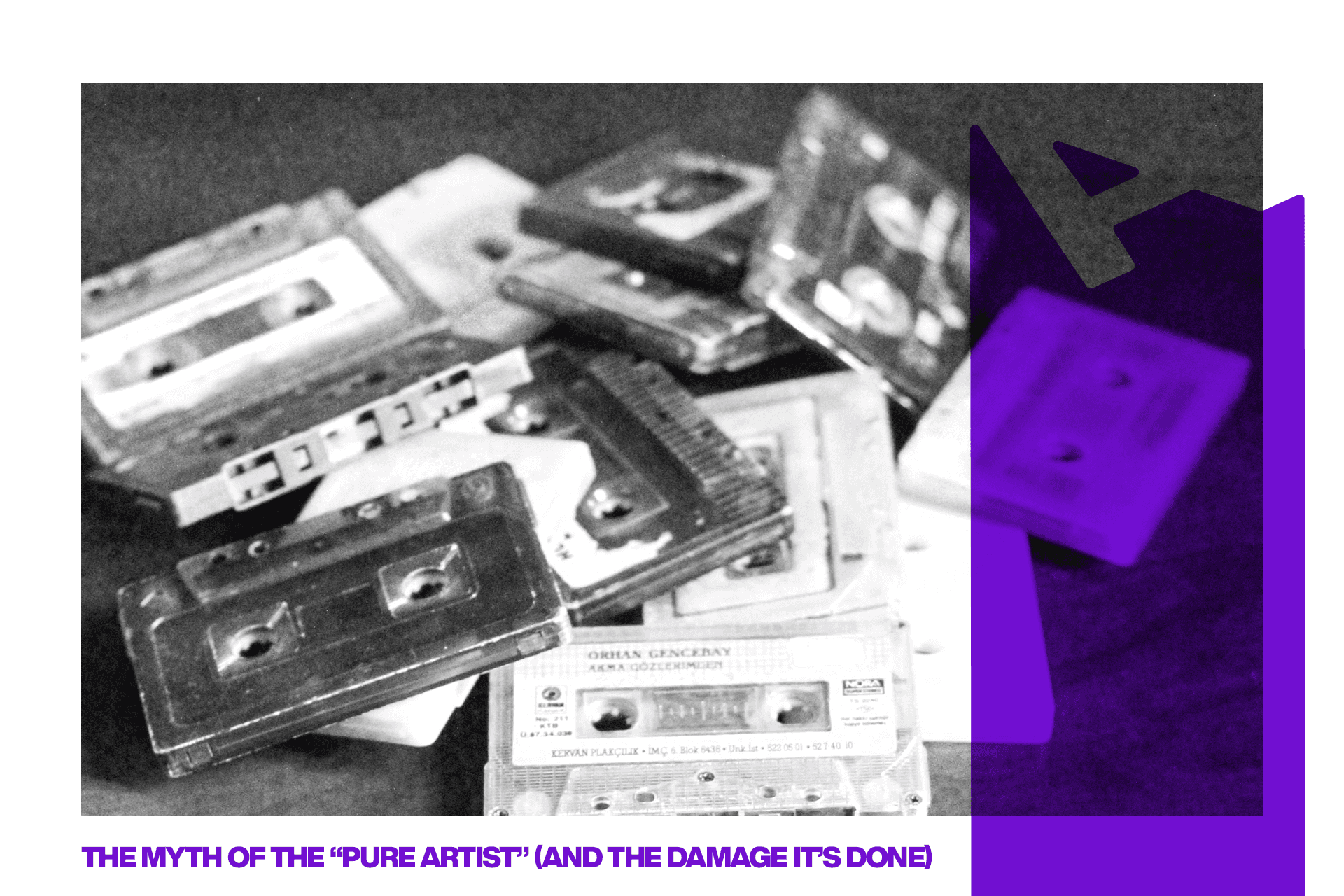
When we were coming up as musicians in the late 90s and early 2000s, there was an idea that floated around almost unquestioned.
Real artists don’t think about money.
You were supposed to do it for the love.
Thinking about business, income, or sustainability was seen as corrupting the art.
If you talked about money too openly, you risked being labelled commercial, or worse, a sell-out.
At the time, this felt noble.
Protective, even.
Looking back, I think it did a lot of damage.
Where the idea came from
I understand why that belief existed.
It was a reaction against exploitative record deals, corporate control, creative compromise, and artists being chewed up and spat out by the industry.
Telling artists not to think about money was meant to keep the focus on the work itself. It was supposed to protect creativity.
But what actually happened was this.
While artists were encouraged to avoid the business side entirely, everyone else in the system learned it in detail. Managers. Labels. Promoters. Platforms. Tech companies.
Artists were told not to look behind the curtain.
And if you don’t understand how the system works, you don’t get to influence it.
The contradiction no one talked about
Here’s the uncomfortable truth.
Even in the most anti-commercial scenes, artists were still behaving like entrepreneurs.
When we were younger, we weren’t calling it that, but we were organising gigs, putting on parties, designing and selling T-shirts, booking vans, rehearsing obsessively, recording wherever we could, and figuring out how to fund the next thing.
That was entrepreneurship. We just didn’t have the language for it.
At the same time, we’d internalised the idea that we should not be thinking about money.
That contradiction created confusion.
We were doing business activities while feeling guilty for acknowledging them as such.
I see the same thing in artists now.
What ignoring money actually does to artists
When artists are taught not to think about money, a few predictable things happen.
They become dependent on others to handle the business side.
They sign bad deals because they don’t understand leverage.
They burn out because nothing is sustainable.
They lose agency over their own careers.
They feel ashamed for wanting stability.
Worst of all, it creates a false binary.
Either you care about the art, or you care about money.
That idea is deeply flawed.
Every artist who has sustained a career for decades understands this.
Money does not replace creativity. It protects it.
Money as fuel, not motivation
There is an important distinction that often gets lost.
Money should not be the reason you make art.
But it absolutely needs to be part of the reality of sustaining it.
More income means more time to create.
More freedom to say no.
More ability to invest in your work.
More control over your decisions.
In simple terms, more money means more agency.
And agency is what allows artists to stay honest.
Creativity does not stop when the song is finished
One of the biggest shifts for me was realising that the same creativity we brought to music could be applied elsewhere.
How projects are released.
How stories are told.
How audiences are connected with.
How income is generated.
Entrepreneurship, at its best, is not spreadsheets and soulless optimisation.
It is creating something from nothing.
That is what artists already do.
A healthier mindset for artists
I do not believe artists need to become business obsessives.
But I do believe this.
Artists deserve to understand how their world works.
Artists deserve to earn a living from their work.
Artists deserve sustainability, not just survival.
Artists deserve agency, not dependence.
Thinking about money does not make you less of an artist.
It makes you harder to exploit.
A final thought
If you want music to be a lifelong pursuit rather than a short, painful chapter, the business side cannot be avoided. But it can be approached creatively, ethically, and on your own terms.
The real myth is not that money corrupts art.
It is that avoiding money somehow protects it.
These ideas tend to continue in my Field Notes newsletter, where I write from inside ongoing work and reflect on the patterns and decisions that shape sustainable artist growth.
If you like what you find here and want to stay connected, sign up to the Field Recordings newsletter below to be the first to hear about new tools, fresh thinking, and occasional useful things worth sharing.